If you’re experiencing skyrocketing bills, inconsistent performance or a mixture of both, you may be feeling the effects of hyperscale cloud overreliance. Engineered for general-purpose enterprise workloads, virtual environments simply aren’t built for the low latency, high throughput demands of modern streaming.
Whether owned or rented from a bare-metal-as-a-service (BMaaS) provider, bare metal solutions differ from virtualized environments primarily because they offer resource isolation. Dedicated servers for streaming give platforms sole tenancy over their hardware - and with that comes a far greater level of control. In practice that looks like:
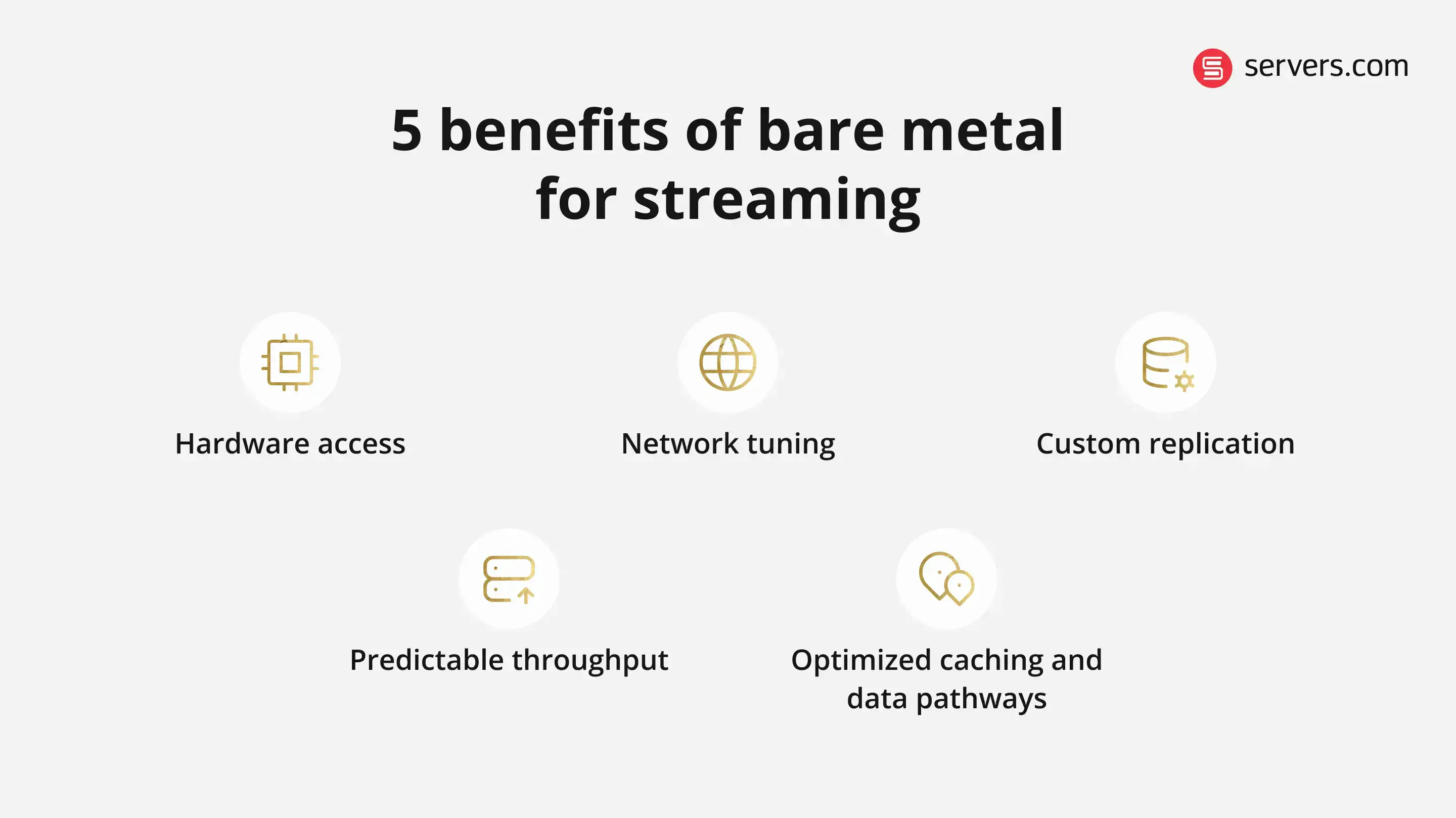
Direct hardware access
Because there’s no virtualization layer, bare metal offers exclusive use over server resources. This is especially impactful for encoding (where hypervisors introduce unnecessary overheads), low-latency packaging workflows with tight timing windows, and high bitrate workloads where jitter from shared compute can cause visible quality degradation. Having direct access to underlying resources means workloads can be carefully optimized to your specific needs, yielding significant performance improvements.
Network tuning
Bare metal lets operators configure network behavior at a much finer level. Custom MTU (maximum transmission unit) helps optimize video packet flow and tailored routing reduces dependencies on generic, multi-tenant routing layers. At the same time, traffic shaping ensures time-sensitive encoding/ingest. This added network control helps reduce jitter, packet loss, and inconsistent throughput - common contributors to latency and rebuffering.
Custom data replication
Instead of relying on one-size-fits-all replication logic, bare metal architectures can be optimized around how streaming traffic behaves. For example, to achieve regional replication, video on demand (VOD) assets may be placed closer to predictable hotspots. At the same time, latency-sensitive replication strategies can be introduced to optimize the distribution of data and reduce timing delays. This ensures content is delivered where it’s needed, when it’s needed, reducing cold-start latency and improving overall stability.
Predictable throughput
In virtualized cloud environments performance varies depending on the hardware demands of other tenants. Bare metal performance is more consistent because resources aren’t shared with other tenants and deterministic network bandwidth ensures data travels within a set time frame. This predictability is essential for continuous playout and 24/7 transcoding environments, where even small fluctuations can ripple into viewer issues. Ultimately, it creates a more stable foundation for maintaining performance during peak events.
Optimize caching logic and data paths
Bare metal infrastructure allows streaming providers to align network design with media delivery. Regional routing helps reduce unnecessary cross-zone traffic; custom caching logic supports segment-based delivery and direct peering opportunities bypass congested public networks. By controlling these elements, you can minimize variability and improve consistency for global audiences.