Back
Back

Stabilizing cost and performance across always-on streaming data pipelines

Stabilizing cost and performance across always-on streaming data pipelines

As streaming platforms mature, the demands on your infrastructure shift beyond rapidly scaled delivery and into a state of sustained processing. Encoding and transcoding are only part of that picture. At this stage, packaging workflows, DRM operations, metadata enrichment, format generation, thumbnail processing, AI enhancement, and analytics ingestion are all operating as continuous data pipelines.

And unlike audience traffic, which rises and falls with demand fluctuations, these compute-heavy workflows run persistently in the background. Over time, they establish a stable baseline demand that shapes both cost behavior and performance expectations.

Highly elastic streaming compute infrastructure excels at responding to audience traffic variability. But sustained streaming pipelines require highly optimized infrastructure architectures built for consistent throughput, predictable CPU allocation, and stable execution under continuous load. So, when choosing the best compute type for these types of workloads, the question needs to shift from “what will help us scale quickly?” to “what will help us stabilize compute behavior and optimize cost for workloads that rarely power down?”

Where always-on pipelines break down

Always-on streaming pipelines tend to break down when they’re placed on streaming compute infrastructure built for burst patterns rather than infrastructure built for sustained, stable, and deterministic performance. When workloads aren’t placed on suitable infrastructure it results in unpredictable cost volatility and increased performance ambiguity.

1. Cost volatility

Highly elastic, virtualized environments make sense for workloads with spiky demand patterns. But for persistent workloads these environments become difficult to manage, resulting in accumulated egress and compute charges, and blurred unit economics. As a result, finance teams struggle to model baseline cost and engineering teams to explain why.

2. Performance ambiguity

When throughput drops in virtualized public cloud environments, it can be difficult to isolate the route cause because you don’t have control over the underlying hardware. It could be down to a contention issue, codec misconfiguration, or even CPU performance variability.

Without deterministic compute, infrastructure variance becomes indistinguishable from application variance, making optimization (and diagnostics) much harder. And for streaming businesses delivering services at scale, this obfuscation is a commercial risk.

Performance variability was one of the challenges video processing platform, Ceeblue, experienced while scaling high-throughput transcoding workflows. By working closely with servers.com to tune their infrastructure at the hardware level, Ceeblue was able to improve streaming performance and optimize encoding throughput.

“servers.com provides us with the latest and greatest in hardware, and we know the difference between hardware that just works well enough and hardware that offers exceptional performance,” said Danny Burns, Founder and CTO at Ceeblue.


Stabilizing always-on pipelines through workload-aligned infrastructure

If you’re experiencing some of these challenges, stabilizing your pipeline doesn’t necessarily require re-architecting your entire streaming compute infrastructure stack. In most cases, issues can be resolved by re-aligning specific workloads with the compute types best suited to the needs of each. A general model should look something like this:

1. Anchor your baseline on deterministic compute

Place persistent processing pipelines on single-tenant infrastructure designed for consistent performance. Unlike multi-tenant virtualized environments, single-tenant infrastructure provides dedicated access to underlying hardware and network resources. This eliminates hypervisor overhead and scheduling variability that can introduce compounding performance fluctuations. For always-on streaming workloads, this is crucial because even minor throughput instability can lead to performance inconsistency.

Single-tenant infrastructure also provides clearer performance attribution, allowing you to better distinguish between application-layer inefficiencies and infrastructure constraints. Over time, this aids capacity forecasting and helps teams calculate overall infrastructure cost for streaming servers more accurately.

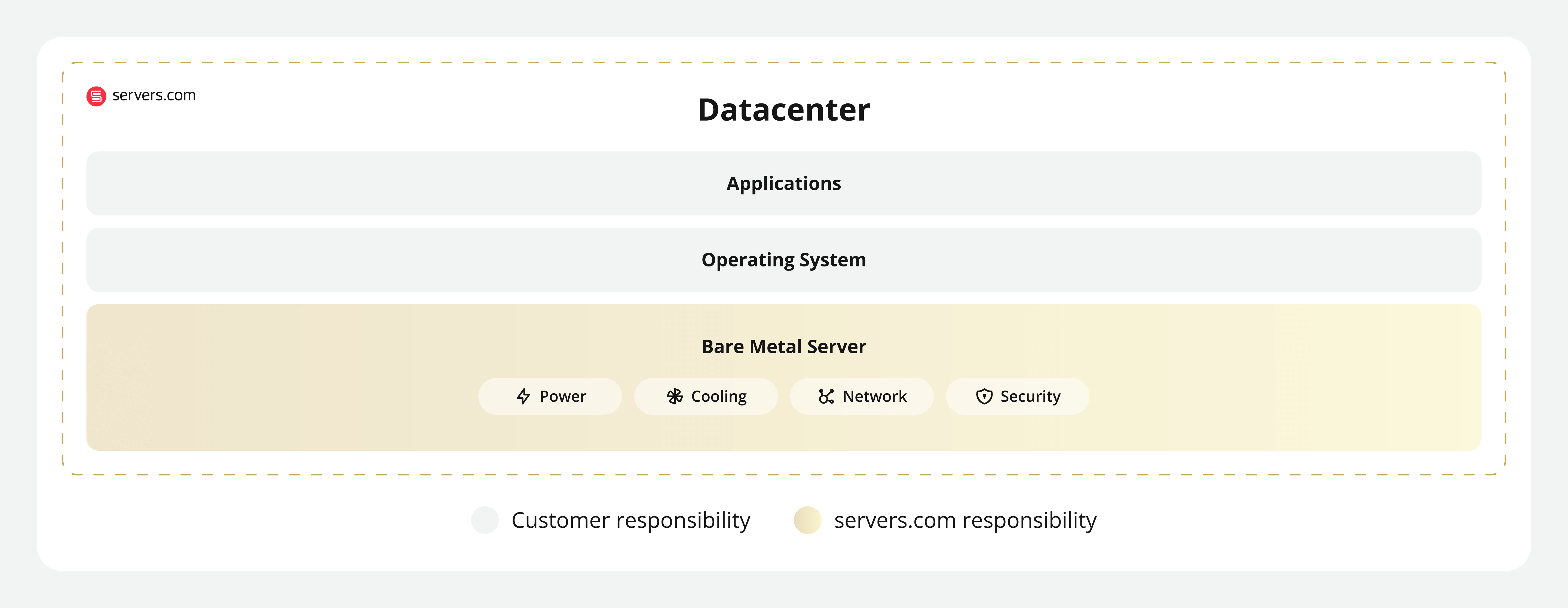
Enterprise Bare Metal (EBM) by servers.com is purpose-built for sustained, performance-sensitive workloads. Rather than forcing adaptation to shared infrastructure models, EBM is designed around predictable compute behavior and infrastructure transparency, offering:

  • Dedicated, single-tenant servers - consistent access to hardware resources without the performance variability that can occur in shared environments.

  • Predictable, transparent cost structure - operate in a transparent infrastructure environment with fixed monthly billing that removes variable usage ambiguity.

  • No hypervisor overhead or ‘noisy neighbors’ - stable pipeline execution under continuous load, fewer backlog risks and more reliable workflows.

  • Configurable hardware aligned to pipeline characteristics - tune CPU, storage, and network around the specific performance characteristics of your streaming pipeline.

  • Operational clarity at scale - get full hardware control and diagnose issues at source for increased focus on optimization rather than troubleshooting.

  • 24/7/365 support from infrastructure specialists - direct access to experienced engineers for an additional layer of operational resilience against downtime.

dedicated server

For streaming organizations, anchoring persistent workloads on EBM establishes a stable compute baseline that keeps throughput and cost-behavior predictable, allowing for clearer capacity planning and easier performance troubleshooting.

It’s precisely why Vindral chose servers.com to handle their streaming workflows. As CTO, Per Mafrost explains, the team wanted to avoid resource contention in shared environments and associated delays:

“It was important for us to find a reliable server provider that could handle the high availability, and heavy traffic demands of live streaming.

“Shared setups such as virtual machines, where resource contention occurs, can be challenging for live streaming. Our setup is built to handle heavy traffic without missing a beat, so everyone watching gets the same experience at the same time.

“servers.com’s dedicated servers for streaming have been great to keep our streams smooth and in sync, and their flexibility and support enabled us to adapt our architecture to our needs.”

2. Add burst throughput without re-platforming

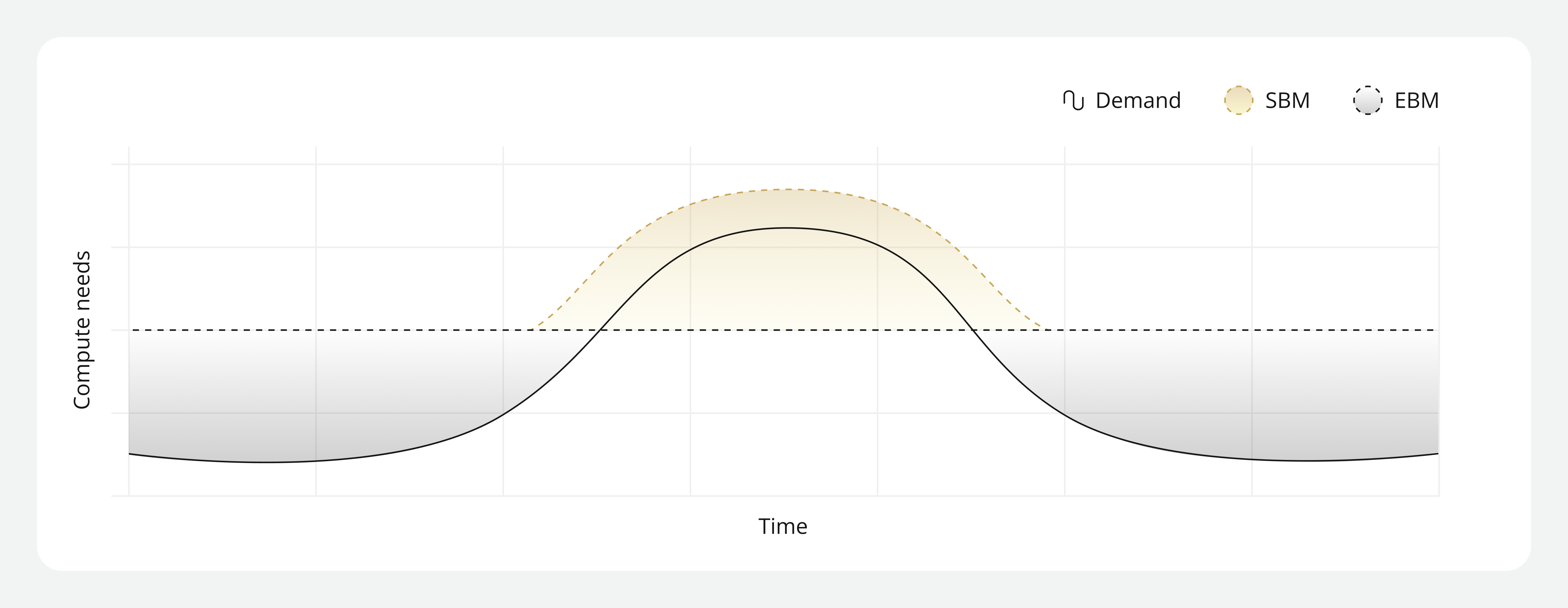
Your infrastructure may have evolved beyond rapidly scaled delivery to sustained processing, but you still need to be able to handle demand spikes when they occur. Anything from format migrations to seasonal growth will temporarily increase processing demand to a point where you need to supplement your baseline compute capacity. The challenge for streaming teams is expanding compute capacity quickly without introducing unnecessary operational complexity, performance headaches, or cost inflation.

Scalable Bare Metal (SBM) by servers.com is designed to extend processing capacity during workload spikes without re-introducing these challenges. Rather than forcing streaming teams to scale through virtualized or shared resource models, SBM delivers rapid, dedicated burst capacity that preserves predictable throughput and operational continuity, offering:

  • Rapid provisioning - choose from a selection of pre-provisioned flavors to deploy additional dedicated servers in minutes, and spin down just as fast.

  • Predictable infrastructure costs - fixed hourly billing so you can scale when needed without committing to long-term contracts that outlast temporary demand surges.

  • Identical hardware performance profiles - maintain consistent encoding density, packaging concurrency and workflow timing by expanding pipelines with infrastructure that mirrors baseline production environments.

  • Seamless integration with persistent infrastructure - operate within the same private network fabric as EBM, allowing throughput expansion without network redesign.

  • Controlled and predictable scaling behaviour - increase processing throughput while preserving deterministic performance across persistent and burst infrastructure tiers.

compute needs in sbm and ebm

For streaming organizations managing both sustained processing and periodic throughput surges, SBM provides a controlled expansion model. You can increase processing capacity quickly, maintain deterministic performance across environments, and scale in alignment with real workload demand. The result is infrastructure that supports growth without forcing you to compromise performance clarity or cost predictability.

Image on the right
“servers.com provides us with the latest and greatest in hardware, and we know the difference between hardware that just works well enough and hardware that offers exceptional performance.”

3. Separate GPU-heavy AI workloads

AI-driven streaming workflows introduce a different performance profile altogether. Processes like upscaling, automated captioning, content moderation, scene detection and real-time inference are highly parallelized, GPU-bound processes that behave fundamentally differently from CPU-based encoding and packaging pipelines.

When these workloads are mixed into CPU-optimized environments it can cause resource contention and inefficient utilization. GPU jobs essentially starve CPU workloads (and vice versa) making performance isolation and cost attribution increasingly difficult.

AI Compute (AIC) by servers.com is a purpose-built infrastructure solution for GPU-intensive streaming and media workflows that require high-performance parallel processing. Rather than forcing AI-driven workloads to compete with CPU-bound pipelines or operate within shared GPU environments, AIC delivers dedicated, high-density infrastructure, offering:

  • Dedicated GPU streaming servers - full access to high-performance GPU resources, for consistent execution of AI workflows.

  • Optimized performance for parallel processing workloads - purpose-built GPU configurations designed to support large-scale AI model execution.

  • Clear utilization and visibility - isolate GPU workloads from CPU-based processing environments, improving resource tracking, optimization opportunities and cost accountability across mixed AI and media pipelines.

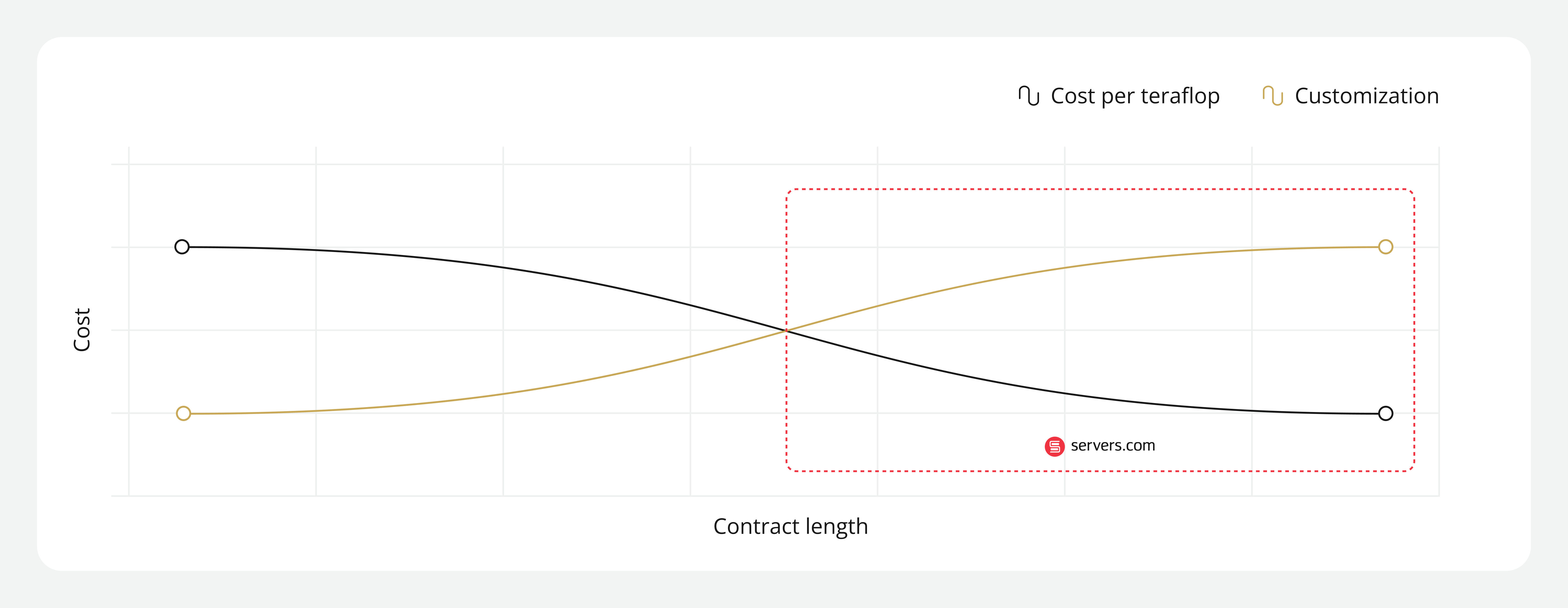
  • Cost efficiency through long-term-commitment options - long-term agreements that provide favorable pricing compared to short-term GPU consumption.

  • Flexible scaling for AI-driven streaming services - expand AI capabilities without impacting baseline pipeline stability.

  • Operational continuity - operate alongside EBM and SBM on the same network within a unified infrastructure environment for simplified infrastructure management.

AI compute

For streaming organizations expanding AI capabilities, isolating GPU workloads from CPU-bound pipelines protects throughput stability, improves cost accountability and improves performance clarity.

Workload placement rubric

Use the following table to guide your placement decisions:

Pipeline stage Workload Performance sensitivity Scaling pattern Best-fit Benefits
Transcoding Always-on High Predictable EBM Deterministic CPU, stable throughput
Packaging Always-on High Predictable EBM Avoid contention, stabilize cost baseline
DRM services Always-on Medium–high Predictable EBM Stable key exchange and latency
Analytics ingestion Always-on Medium Linear growth EBM Continuous I/O, sustained load
Catalogue backfill Temporary High Spiky SBM Rapid expansion without VM overhead
Event prep encoding Temporary High Short burst SBM Provision identical nodes on demand
AI upscaling / moderation Continuous or batch Very high GPU-bound AIC Dedicated GPU isolation
Image on the right
“servers.com’s dedicated servers for streaming have been great to keep our streams smooth and in sync, and their flexibility and support enabled us to adapt our architecture to our needs.”

The commercial advantage of compute stability

Stabilizing always-on pipelines delivers three outcomes: predictable throughput, explainable cost behavior, and operational clarity. It’s not about abandoning elasticity altogether but assigning compute more deliberately. By anchoring persistent workloads on deterministic infrastructure, expanding via scalable bare metal when needed, and isolating GPU-heavy pipelines, you can regain control over performance and cost behavior.

If your background processing has quietly become your largest and most persistent compute expense, it may be time to realign. servers.com works with streaming platforms to map pipeline stages to infrastructure tiers and implement custom hybrid bare metal cloud architectures. Speak to our experts to discuss your use case.

Author: Frances Buttigieg

Frances Buttigieg, Senior Content Writer

Frances is proficient in taking complex information and turning it into engaging, digestible content that readers can enjoy. Whether it's a detailed report or a point-of-view piece, she loves using language to inform, entertain and provide value to readers.

Related articles