Back
Back

Why predictable infrastructure costs matter as competition tightens

Why predictable infrastructure costs matter as competition tightens

In today’s fast-moving programmatic advertising ecosystem, margins are tighter than ever. Under these conditions, predictable billing for high-egress adtech increasingly separates those platforms that scale confidently from those forced into reactive bidding and budget decisions.

Early in an adtech company’s growth, infrastructure costs typically feel manageable. Demand is predictable, scaling is linear, and usage-based hyperscale environments often seem cost-efficient. But as bid volume rises, pricing becomes harder to model. Data egress fees, performance variability, and sudden holiday traffic spikes introduce cost volatility that disrupts forecasting. In real-time bidding (RTB) environments, where profitability depends on microsecond decisions and lean margins, predictable infrastructure billing becomes a direct driver of revenue performance.

Why infrastructure cost predictability is important

Predictable cost behavior provides the operational and financial certainty needed to scale confidently and compete effectively.

1. Predictable costs help you bid more competitively

In real-time-bidding (RTB), a platform’s ability to win premium impressions comes down to speed and marginal cost per bid. If your infrastructure costs fluctuate a lot, your bid strategies are likely to become more conservative. You might be forced to limit participation to protect budgets instead of optimizing for win rate or overall yield.

Mature adtech platforms evaluate infrastructure against key metrics like cost per bid request and cost per service call, then choose infrastructure with pricing models that enable competitive RTB decisions. By removing infrastructure cost variability and pairing that with predictable performance, adtech platforms can participate more aggressively in auctions and win more high-value impressions without fear of hidden surcharges.

It’s this approach that led Appodeal Stack to partner with servers.com. The all-in-one growth engine was scaling fast and needed an infrastructure partner offering high bandwidth and competitive pricing. “We use cost per single web-service call as a metric helping us evaluate infrastructure providers. servers.com offers very competitive prices and great service,” said Alexandr Zhitluhin, CTO of Appodeal Stack. “The free intercontinental private network was a clinching argument for us.”

2. Predictable costs allow you to take smart risks

When infrastructure cost behavior is opaque, finance teams become conservative. Budgets tighten and test strategies get postponed. Elsewhere, machine learning models that could improve win rate go untested because no one can confidently forecast their impact on spend.

By contrast, predictable adtech infrastructure costs give teams the freedom to:

  • Increase bid participation without fear of budget blowouts

  • Experiment with pricing strategies that could unlock new revenue

  • Allocate budget for machine learning models that improve auction outcomes

servers.com’s infrastructure is built on dedicated servers and optimized network paths. This removes unpredictable cost layers while delivering consistent adtech performance that’s easy to model in finance forecasts.

Our solutions provide transparent monthly billing for Enterprise Bare Metal (EBM) workloads, fixed hourly costs for Scalable Bare Metal (SBM) workloads, and long-term cost-optimized plans for GPU workloads as part of our AI Compute (AIC) offering. It means that whichever solutions you choose to deploy, you can focus on winning bids with full cost transparency.


Enterprise Bare Metal (EBM) Scalable Bare Metal (SBM) AI Compute (AIC)
Fixed monthly billing Fixed hourly billing Fixed costs on long-term-agreement (LTA)

3. Predictable costs protect margins as auction volume grows

Effective infrastructure evaluation is essential for margin management. Predictable adtech infrastructure costs enable accurate forecasting of cost and bidding measurements (e.g., cost-per-bid, cost-per-click) as well as overall ROI.

As auction volumes grow and partner integrations multiply, this clarity allows finance and engineering teams to defend margins with confidence. You spend less time explaining why margins deviated and more time optimizing bids and scaling services.

Take GeoSpot Media, a programmatic advertising technology platform running on servers.com infrastructure. With servers.com, they’ve maintained predictable costs for QPS (queries per second) while maintaining performance stability. In turn this has helped the team reduce firefighting cycles and keep bidding engines operating at high efficiency.

“As QPS climbs, every millisecond counts. Even slight latency can mean missed bids and lost revenue,” said Founder and CEO, Rishi Agarwal. “servers.com’s infrastructure supports our demand for consistent uptime and fast response times, enabling us to handle double the previous QPS without any latency issues.”

4. Predictable costs improve financial forecasting and investor confidence

At later stages (particularly for funded businesses) infrastructure becomes a strategic financial decision that influences valuation, investor confidence, and M&A appeal. Investors and finance leaders care about cost forecast accuracy, clear unit economics, and predictable long-term operating expenses.

Unlike usage-based hyperscale cloud billing, which introduces unpredictable data transfer and cost hikes as compute demands grow, fixed infrastructure pricing models (like servers.com’s hourly, monthly and LTA billing cycles) mean you can forecast with confidence. And, ultimately, that means long-term planning becomes easier and board conversations become more productive.

Hyperscale cost unpredictability for adtech

Hyperscale cloud providers are attractive at early stages. Free credits, usage-based pricing, instant scaling, and familiar tooling hide future complexity. But as workloads grow, opaque billing can make true cost difficult to model.

Predictable infrastructure architectures such as bare metal cloud environments remove many of these variables, giving you:

  • Transparent pricing without hidden charges

  • Single tenant adtech infrastructure without noisy neighbors

  • Stable performance even under peak load

This combination of efficient data usage from dedicated hardware and billing transparency lowers overall costs and supports margin defence.  When evaluating infrastructure partners, consider these criteria:

Performance predictability
Consistent RTB response time under load
Reliably low latency across regions
Dedicated network capacity
Cost transparency
Fixed pricing options
Clear bandwidth and egress terms
Predictable scaling policies
Operational confidence
Support with deep adtech experience
Global footprint for multi-region bidding
Infrastructure tailored for real-time decision workloads

How Scalable Bare Metal (SBM) enables predictable costs-even at peak scale

For many adtech platforms, predictable baseline infrastructure is only part of the challenge. RTB environments rarely operate at perfectly steady demand. Traffic surges during seasonal campaigns, live events, or rapid partner expansion can create temporary compute spikes that are difficult to forecast.

Traditional dedicated infrastructure delivers cost predictability but can lack on-demand elasticity, while hyperscale cloud offers scalability at the expense of pricing transparency and performance consistency. servers.com’s Scalable Bare Metal (SBM) solution bridges this gap by combining dedicated hardware performance with fast, on-demand scalability.

SBM allows bare metal servers to be provisioned in minutes and billed hourly, giving you access to burst capacity without introducing unpredictable cost layers or resource contention. Because SBM uses standardized, pre-configured hardware flavors, you can scale your adtech infrastructure by adding identical nodes with predictable performance and pricing characteristics. This standardized approach helps maintain consistent unit economics as your workloads expand.

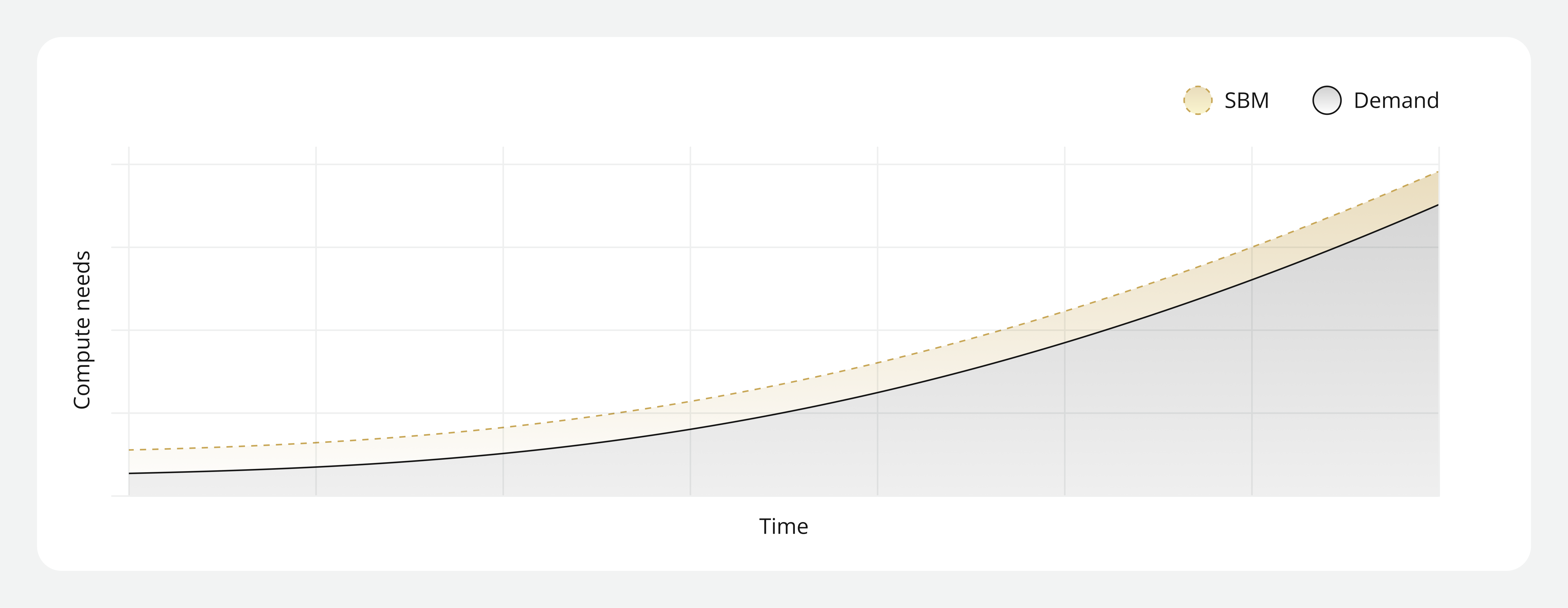
compute needs in SBM

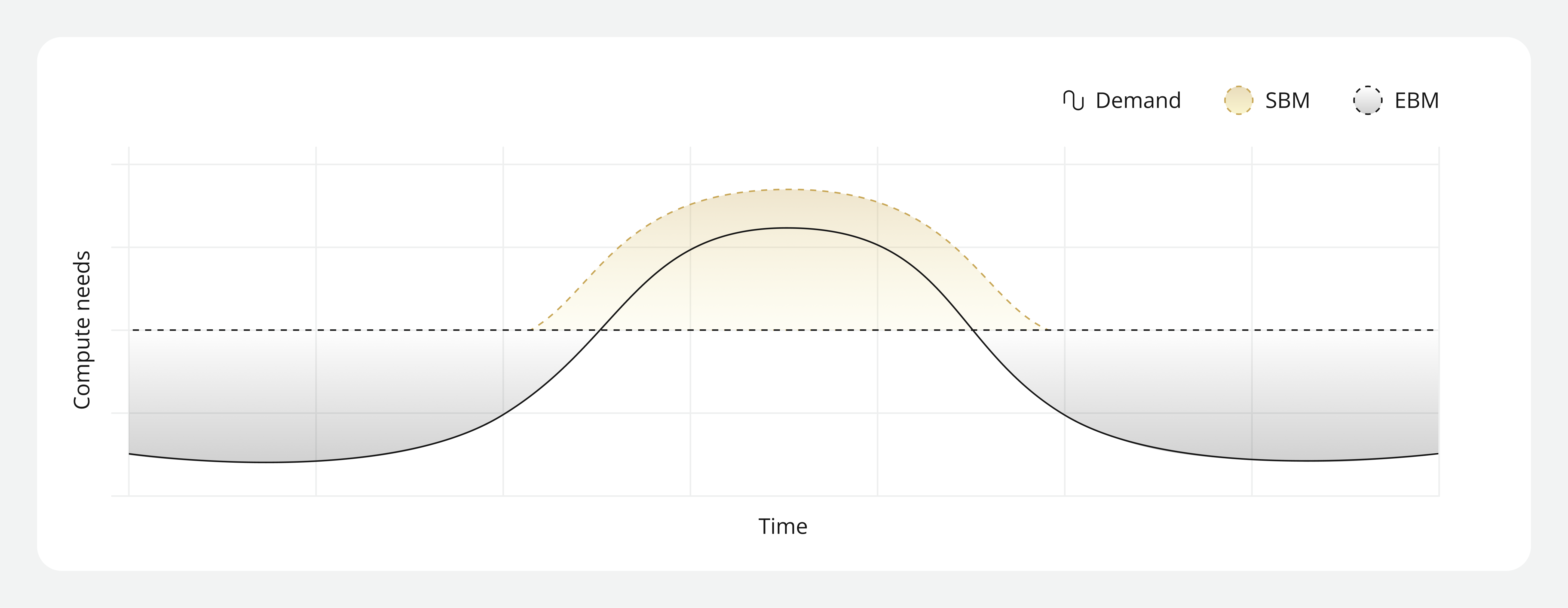
SBM is often deployed alongside our Enterprise Bare Metal (EBM) infrastructure, providing a stable, cost-efficient baseline while enabling you to scale quickly during traffic spikes. For adtech teams this provides the ability to maintain bidding performance and margin stability without over-provisioning infrastructure or relying on volatile usage-based public cloud billing models.

compute needs in SBM and EBM

Cost predictability is a strategic advantage

Where margins are under pressure and competitive intensity is increasing, predictable infrastructure costs are a strategic advantage. Predictability enables competitive bidding, smart innovation, margin protection, and overall better financial forecasting for leadership and investors. This combination of performance and economic clarity turns infrastructure into a growth engine as opposed to merely a margin constraint.

servers.com offers high-performance dedicated adtech infrastructure built for the real demands of modern adtech platforms. With predictable pricing, stable performance, and expert support, you’ll gain the clarity needed to participate aggressively in auctions and protect your margins at scale.

Speak to our experts to discuss your use case and explore servers.com’s adtech hosting solutions.

Author: Frances Buttigieg

Frances Buttigieg, Senior Content Writer

Frances is proficient in taking complex information and turning it into engaging, digestible content that readers can enjoy. Whether it's a detailed report or a point-of-view piece, she loves using language to inform, entertain and provide value to readers.

Related articles