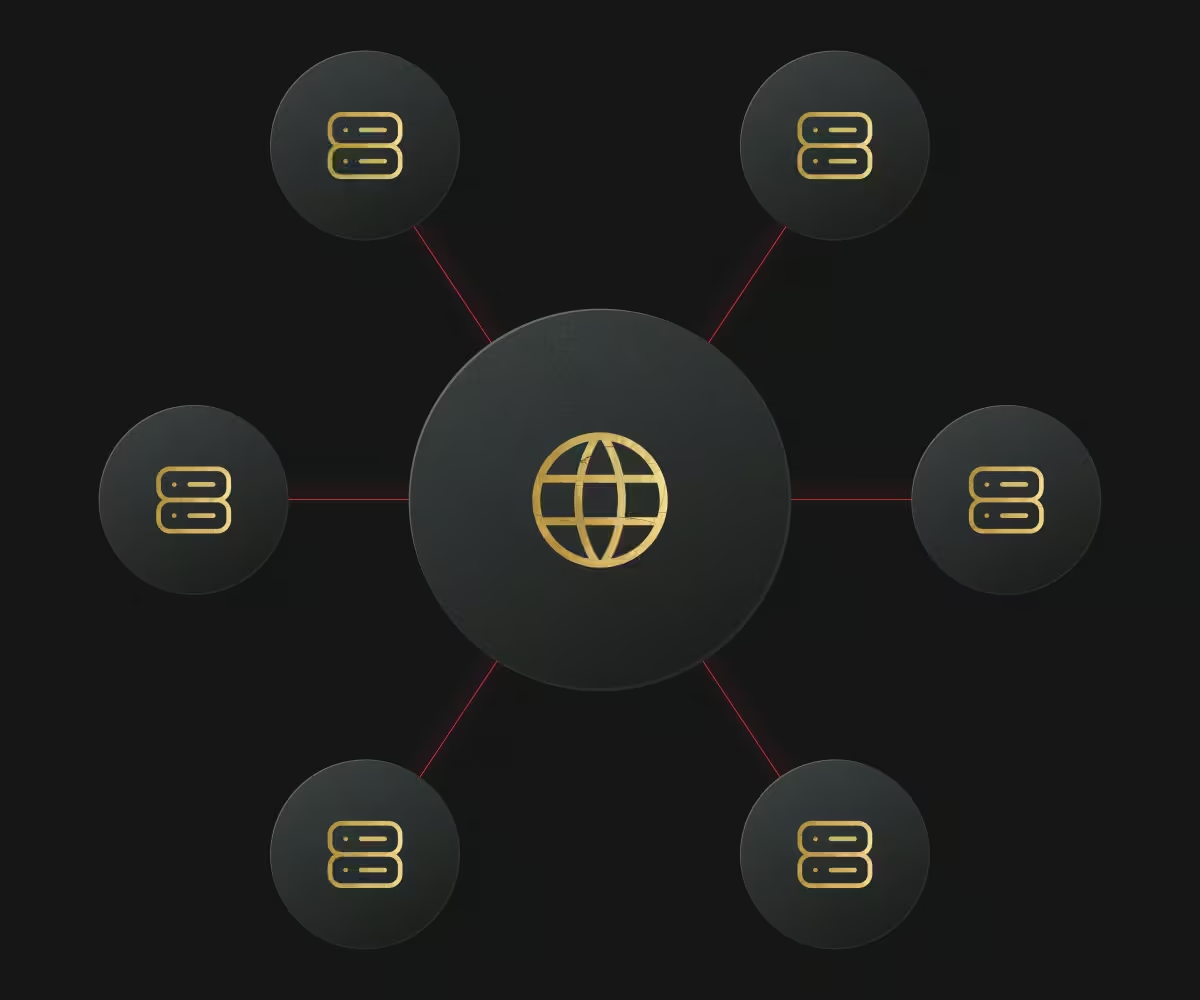
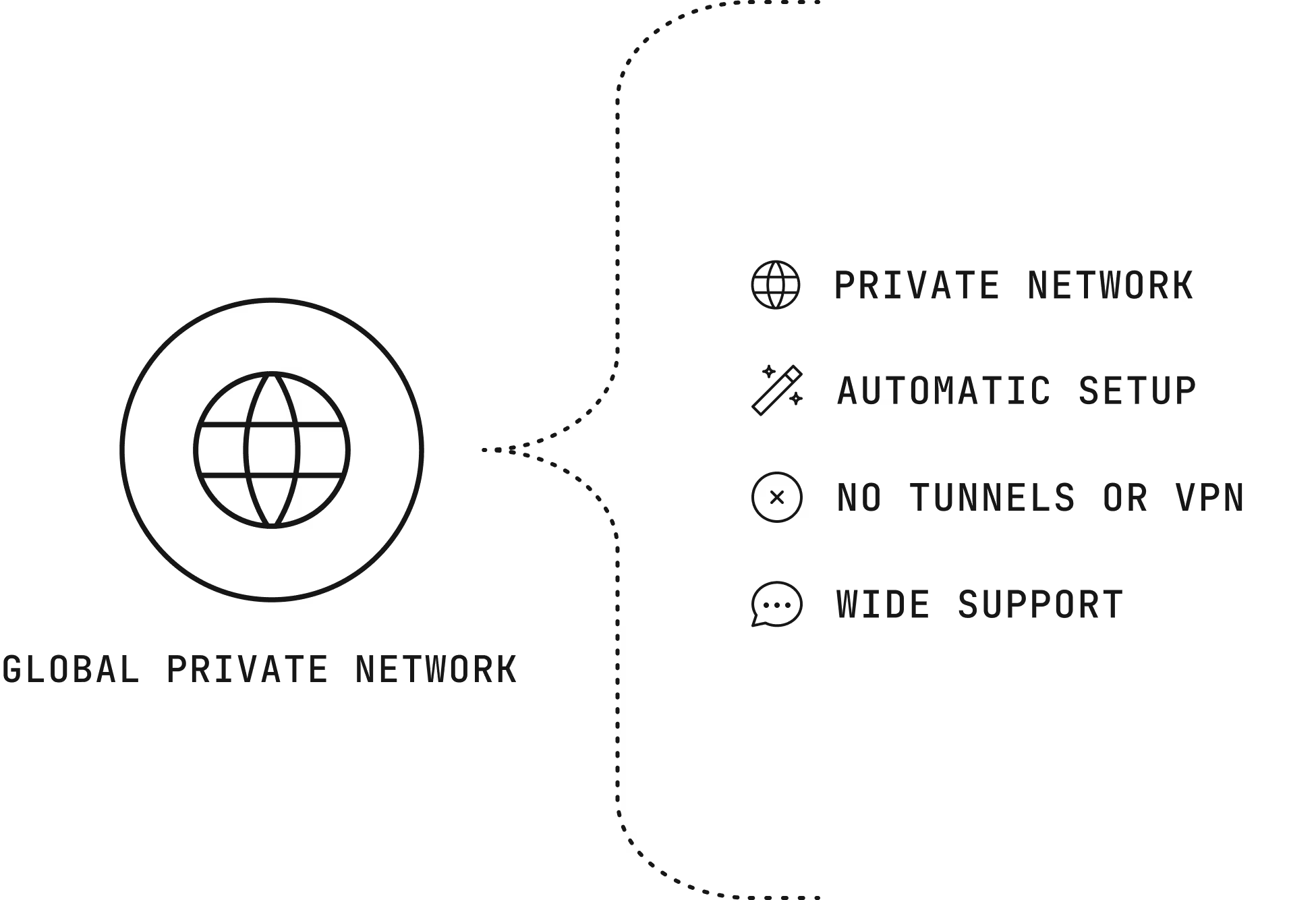
The Global Private Network is for every customer, because it’s switched on with the first dedicated server, and it matters most to platforms that move data between servers or regions.
Replicate databases and sync services between regions without paying for public traffic.
Traffic between the parts of your application, such as bidders and databases, stays on a private network.
Cloud Servers, bare metal, and Kubernetes clusters talk to each other on one private network.
What comes with the Global Private Network is a private address block of your own, configured on every server automatically.
A block of private addresses allocated to your account and isolated from other customers.
The network is configured in the operating system and on the network devices when each server is set up.
Servers reach each other across continents directly on private addresses.
Available for Enterprise Bare Metal (EBM), Cloud Servers, Scalable Bare Metal (SBM), and Kubernetes clusters.
The GPN reduces private traffic costs and exposure of traffic between your own servers.
Traffic routed over the private network isn’t billed, which removes the charge that usually appears when one region calls another.
Traffic between servers never crosses the public internet.
One private network replaces the tunnels and gateways teams otherwise build and maintain.
Point your services at private addresses.
Each server’s private address is on its details page in the portal, or shown by ifconfig or ipconfig.
Point replication, service calls, and backups at private addresses instead of public ones.
Public traffic between your own servers drops off the next invoice.
The infrastructure, the network, and the people come from one provider that designs around the workload.
Every server we rent belongs to one customer, and no proprietary service sits between your software and the hardware, so moving away never means rewriting your platform.
Locations across North America, South America, Europe, and Asia Pacific, joined by a private network with free transfer between sites.
The Customer Portal, a public application programming interface (API), a command-line tool, and Terraform work across the catalog, with the same hardware profiles in every region.
The engineers and account managers who help design your environment are the ones who help you migrate it and run it.
Support from engineers, backed by a team that knows your environment, is part of every product we sell, and it doesn’t depend on how much you spend with us.
Engineers answer your messages 24 hours a day and every day of the year, and your account team brings the context of your environment.
Your account managers stay with you for the life of the relationship, from the first call onward.
Architects take part in design, migration, and later changes, so decisions get made with the workload in view.
We work in your Slack, Discord, Teams, Telegram, or WhatsApp instead of asking you to learn a ticket system.
Nothing. The service is free.
Up to 100 gigabits per second (Gbps) for each dedicated server, however, it depends on both what's available in the data center location and what you need. We can provide link speeds of 10, 25, and 100 Gpbs.
No. Your private network is allocated with your first dedicated server and configured automatically.
Yes, through VPN to GPN, or through Direct Connect for a dedicated physical link.
Ask an engineer to review how your services talk to each other, and which traffic can move onto the private network.